Exploring the Hidden World Beneath Earth’s Waters Safely
The Allure of Submerged Realms
Beneath the surface of lakes, seas, and jungles lies a realm that feels untouched by time. Submerged passages, sculpted by water over millennia, invite explorers to witness nature’s quiet artistry. The appeal is not only visual but emotional, as descending into these spaces often brings a profound sense of humility and calm. Light behaves differently underwater, sound is muted, and movement slows, creating an atmosphere that feels detached from everyday life. For many divers, these environments represent the ultimate frontier of exploration, where curiosity meets respect for forces far older than humanity.
Understanding Cave Diving as an Exploration Discipline
Cave Diving is a specialized form of underwater exploration that takes place in fully enclosed, overhead environments where direct access to the surface is not always possible. Unlike open-water diving, it demands exceptional awareness, precise buoyancy control, and an understanding of how water flows through rock systems. These caves are often carved from limestone and can stretch for kilometers, revealing tunnels, chambers, and formations that resemble underwater cathedrals. The experience is both thrilling and meditative, requiring divers to rely on their training and instincts while navigating spaces shaped by geological history.
Geological Wonders Hidden Below
Underwater caves tell stories of shifting climates and ancient landscapes. Many of these systems were formed when sea levels were lower, allowing rainwater to erode rock and create vast networks. As waters rose, these caves flooded, preserving formations such as stalactites and stalagmites beneath the surface. The result is a unique blend of dry-cave geology and aquatic life. Minerals shimmer in torchlight, while walls bear the marks of slow, patient erosion. Each dive becomes a journey through time, revealing chapters of Earth’s past that are inaccessible by any other means.
Cenotes as Gateways to the Underworld
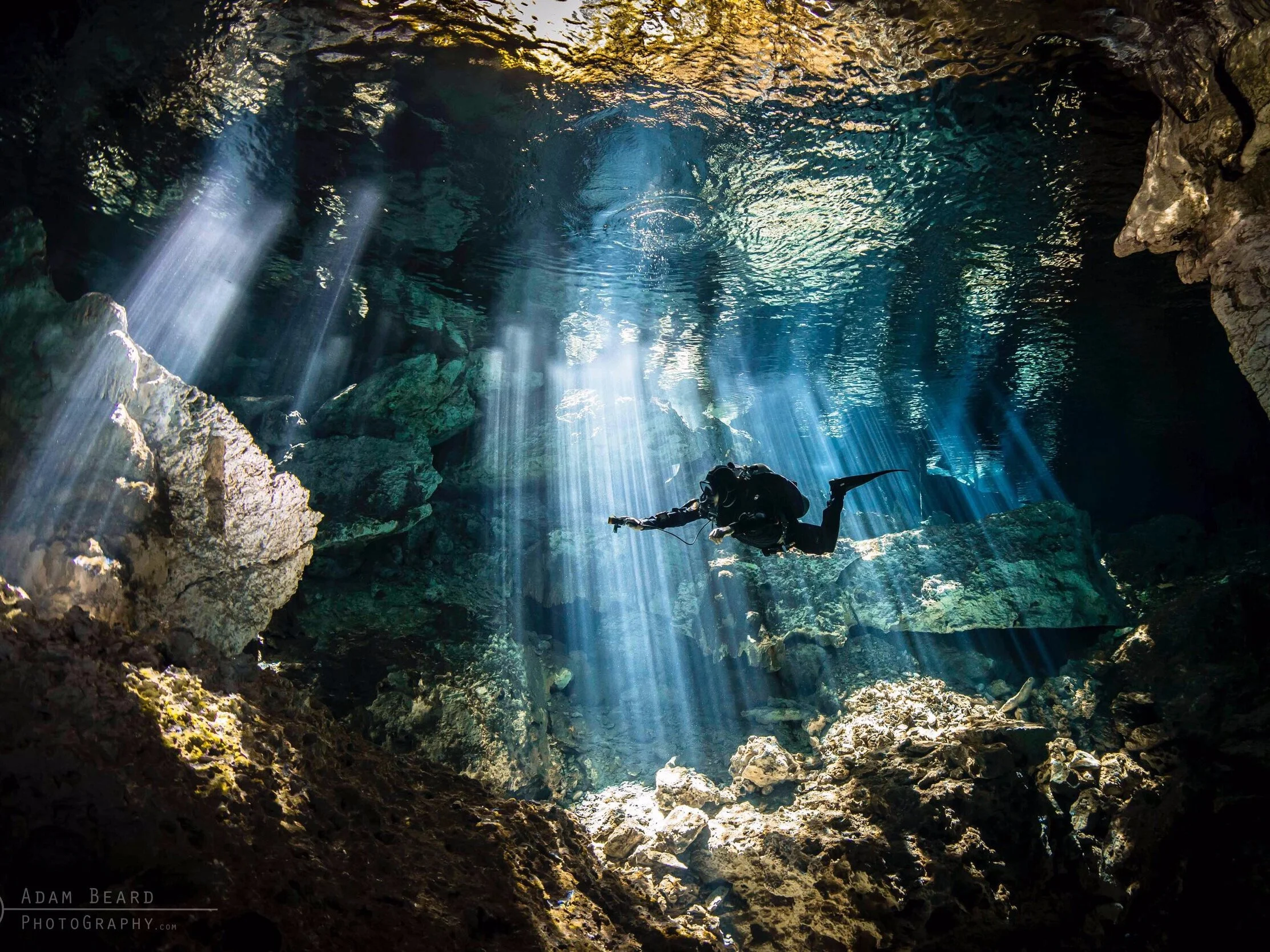
In certain regions, particularly where limestone bedrock dominates, natural sinkholes open directly into flooded cave systems. Cenote diving offers access to these extraordinary spaces, combining the beauty of open water with the mystery of underground passages. Sunlight often penetrates the entrance, illuminating crystal-clear water and creating dramatic beams that dance across rock formations. These locations are culturally significant as well, often regarded as sacred by ancient civilizations. Diving here feels like stepping into a natural sanctuary, where geology, history, and water converge in breathtaking harmony.
The Role of Skill, Discipline, and Preparation
Exploring underwater caves is not about speed or conquest but about patience and precision. Divers must develop a deep understanding of their equipment and environment, practicing controlled movements to avoid disturbing delicate sediments. A calm mindset is essential, as stress can quickly escalate in confined spaces. Preparation involves studying cave layouts, understanding water conditions, and respecting personal limits. This disciplined approach transforms the experience from a risky endeavor into a controlled exploration, where safety and awareness guide every decision.
Life in the Darkness
Despite the absence of sunlight, underwater caves are not devoid of life. Specialized organisms have adapted to these environments, often displaying pale coloration and heightened sensory abilities. Some species exist nowhere else on Earth, making caves important reservoirs of biodiversity. Observing these creatures offers insight into evolution under extreme conditions. Divers often describe encounters with cave-dwelling life as humbling reminders of nature’s resilience and adaptability, reinforcing the need to protect these fragile ecosystems.
Cultural and Environmental Significance
Underwater caves hold more than geological interest; they are archives of human and natural history. Archaeological discoveries have revealed ancient tools, remains, and artifacts preserved by stable underwater conditions. These findings provide valuable clues about early human migration and climate change. At the same time, the increasing popularity of underwater exploration highlights the importance of conservation. Responsible diving practices ensure that these environments remain intact for future generations, balancing exploration with stewardship.
A Journey That Changes Perspective
Diving into submerged caves often leaves a lasting impression that extends beyond the water. The experience encourages mindfulness, patience, and respect for the natural world. Many divers report a heightened appreciation for Earth’s hidden systems and a renewed sense of responsibility toward environmental preservation. The silence, the slow rhythm of movement, and the sheer scale of geological formations foster a connection that few other activities can offer.
Embracing the Mystery with Respect
The world beneath the surface remains one of the last great frontiers, filled with beauty and complexity. Whether navigating intricate tunnels or descending through sunlit sinkholes, underwater cave exploration invites us to slow down and observe rather than conquer. By approaching these environments with humility, skill, and care, divers can experience their wonders while ensuring that the mystery and majesty of submerged realms endure for generations to come.
Comments
Post a Comment